


The New Addiction? What AI Can Teach Us from Social Media’s Mistakes
- Louise Sommer

- Oct 28, 2025
- 4 min read
Updated: 1 day ago
This essay continues my inquiry into how technology, culture, and human development shape one another.
The scroll that never ends... It’s past midnight. A human lies in bed, phone glowing in the dark. The thumb keeps flicking upward; TikTok, Instagram, Snapchat, Facebook... One clip, one image, one post after another. Hours dissolve into nothing. The brain is hooked, not by accident, but by design.
We know this story well by now. Social media isn’t just entertainment. It’s engineered for addiction, exploiting dopamine loops, likes, and infinite scrolls that hijack attention. Research has proven again and again: SoMe (social media) is not neutral.
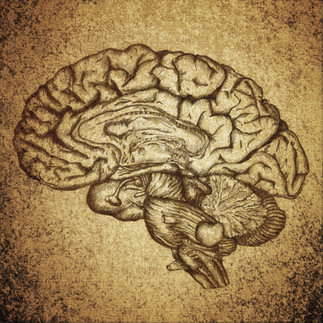
It rewires our brains.
But here’s the question we’re not asking loudly enough:
What happens when artificial intelligence (AI) begins to do the same. Not through likes or scrolls, but through the language of empathy?

The lesson from social media
Social media promised connection but delivered something else: a hollow substitute. Notifications and endless feeds simulate closeness, but leave many more isolated than ever.
The design is intentional.
“Sticky” apps keep us engaged by giving small hits of reward, dopamine surges that keep the brain coming back for more. Over time, the human cost has been devastating:
Rising youth loneliness.
Increased anxiety and depression.
Erosion of attention spans.
Shallow connections replacing deep relationships.
The problem was never simply the platforms. It was how they were designed and how little accountability guided their use.
Enter AI: A different kind of seduction
AI is not built on likes or endless scrolls. It’s built on something far more powerful: language that feels human.
Large language models are trained to mirror empathy, warmth, and understanding. They don’t just give answers. They give responses that feel emotionally intelligent. They listen, they comfort, they “care.”
The risk? Not only attention addiction, but emotional attachment; Students confiding more in a chatbot than in their teacher. Young people seeking validation from algorithms instead of peers. Professionals outsourcing reflection and decision-making to machines.
This is not science fiction. It is already happening.
Artificial Connection vs. Authentic Presence
In an earlier blog, I wrote that AI is not to blame. Like the sports car, the danger lies not in the tool itself but in how we use it. And in The Crisis Isn’t AI, It’s Artificial Connection, I argued that the real crisis is disconnection; when machines replace the human closeness we so desperately need.
The same applies here. Addiction is not built into AI itself. But if AI is designed, or allowed, to become a substitute for authentic relationships, it may repeat the mistakes of social media on an even deeper level.
What’s at stake for education and leadership
If we ignore this risk, universities and institutions may see an erosion of the very capacities they are meant to cultivate:
Critical thinking replaced by instant answers.
Resilience weakened when students lean on AI for comfort instead of mentors or peers.
Authentic mentorship hollowed out if scholars feel displaced by machines.
For leadership, the risk is just as clear: we may raise professionals who can manage systems but cannot connect with humans.



Our second chance
But here is the opportunity: AI doesn’t have to follow the path of social media. We can choose differently this time.
Digital resilience education: Teach students not only how to use AI, but how to recognise its risks, resist dependency, and value authentic presence.
AI literacy for scholars: Train researchers not just to adopt AI tools, but to mentor with empathy and critical reflection.
Reward systems for human connection: In universities and workplaces, measure and value listening, empathy, and presence as much as efficiency.
If social media showed us what happens when design ignores psychology, AI gives us a second chance to align technology with what truly strengthens human intelligence.
The question is not whether AI will become addictive.
The real question is whether we will design and use it responsibly, or allow it to hollow out the very relationships we need most.
Like the ancient ports of the Mediterranean, where empathy was the currency of survival, we must decide what we value today. Will it be speed, efficiency, and simulation? Or will it be empathy, presence, and authentic connection?
In the end, technology does not decide who we become. We do.
The question is: are we ready to take on the leadership?
Note: This article builds on the ideas explored in my blog, Why AI Needs Psychological Containment, Not Just Ethical Guidelines. When I refer to “AI,” I am not describing a single, uniform system. Different models are designed, governed, and experienced in different ways, and these differences matter in practice. At the same time, the AI landscape is evolving rapidly. What holds true at the time of writing may shift as these systems develop, so this perspective should be read as a current reflection rather than a fixed position.
I would love to hear your reflections on this topic. Join the conversation on LinkedIn, where I share more insights and invite dialogue with educators, creatives, and leaders worldwide.
Was this article inspiring and helpful?
Share it on social media
Pin it!
Send it to a creative friend who needs to read this


